


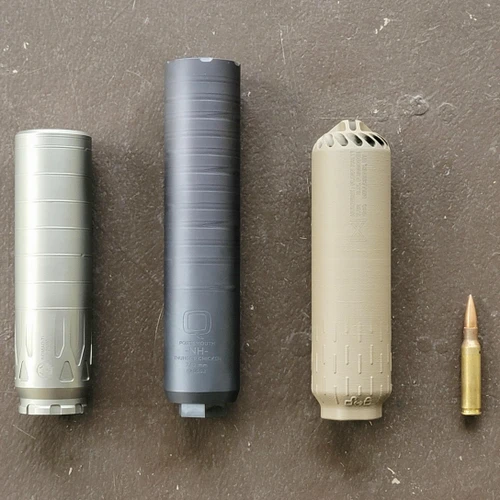
Flow-Through vs. Traditional Suppressors:
What’s the Difference?
By Miami International Arms · Miami, Florida
Traditional and flow-through suppressors both soften muzzle blast. The difference is how they handle the gas that follows the bullet out of the barrel. On a semiautomatic firearm, that difference can affect how much gas you feel near your face and how much of the sound you hear comes from the action opening beside you.
How does a traditional baffled suppressor work?
When a bullet leaves the barrel, hot, high-pressure gas rushes out behind it. That sudden release creates the muzzle blast. A traditional suppressor gives the gas room to expand and uses internal partitions called baffles to redirect it. The gas exits less abruptly, softening the blast. The shot remains audible.
A design that restricts gas flow more can keep pressure elevated longer. On a semiautomatic, some gas can escape through the ejection port when the action opens. From behind the firearm, you might hear a sharp burst close to your ear or feel a puff of gas near your face, even when the blast out front is noticeably softer.
How does a flow-through suppressor work?
A flow-through suppressor also gives gas room to expand. Its design allows gas to move forward and exit more readily. This can reduce suppressor backpressure and, on some semiautomatics, reduce gas blowback near the shooter. How much gas you feel depends on the suppressor, the firearm’s action, and the ammunition.
Are flow-through suppressors louder?
It depends on where the sound is measured. A more restrictive suppressor can produce a softer report beside the muzzle. A higher-flow suppressor can sound quieter at the shooter’s ear if it reduces the burst from the ejection port. The same two suppressors can rank differently at those two microphone positions.
When a review calls one suppressor quieter, check where the microphone was placed. The muzzle reading tells you about sound beside the muzzle. The shooter’s-ear reading captures the sound that reaches the firing position, including sound from the action. For a fair comparison, look for measurements taken with the same firearm and ammunition.
Frequently Asked Questions
What’s the difference between backpressure and gas blowback?
Backpressure describes how restricting gas flow can keep pressure elevated longer. Gas blowback is the gas that escapes rearward near the shooter. The firearm’s design and when the action opens influence how much gas actually reaches your face.
Does a flow-through suppressor eliminate gas blowback?
A flow-through suppressor can reduce the amount of gas that reaches the shooter on some semiautomatics. Gas can still escape from the action, and the amount varies by setup.
Do you still need hearing protection with a suppressor?
Yes. Suppressors reduce muzzle blast, and the remaining sound can still damage hearing. A supersonic bullet also produces its own crack in flight. NIOSH researchers recommend wearing hearing protection when shooting suppressed.
For more on muzzle blast, bullet crack, and what reaches the firing position, read How Do Suppressors Work? What You Hear Behind the Gun on the Miami International Arms blog.