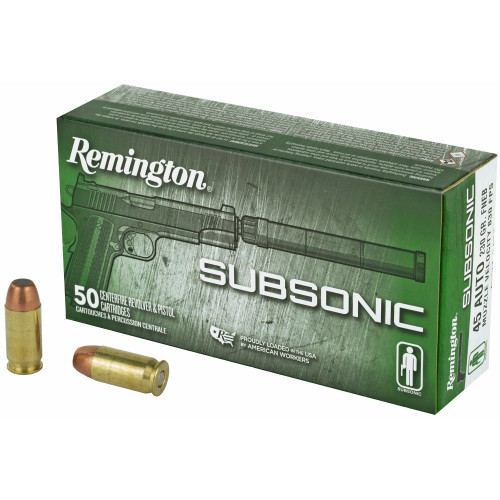
What Is Subsonic Ammo? Subsonic vs. Supersonic Ammunition Explained
By Miami International Arms | Miami, Florida
Subsonic ammunition fires a projectile that travels below the speed of sound. A supersonic projectile travels faster than sound and produces a shock wave commonly called a sonic crack. That difference explains one part of what you hear when a shot is fired. Muzzle blast, the firearm’s action, and your position relative to the shot also affect what reaches your ears.
Subsonic vs. supersonic ammo
You’ll see subsonic printed on some ammunition boxes. Other factory loads have published velocities below the speed of sound without using the word on the packaging. That’s because subsonic describes the speed of the projectile from a specific load. Two boxes marked with the same cartridge name can have different published velocities. Actual velocity can vary with the firearm, and the speed of sound in air changes with temperature.
Which cartridges come in subsonic loads?
Factory examples span rimfire, handgun, rifle, and shotgun ammunition. The examples below include loads explicitly marketed as subsonic and standard factory loads whose published velocities are below the speed of sound under typical conditions.
|
Ammunition type |
Examples |
|---|---|
|
Rimfire |
.22 Long Rifle |
|
Handgun cartridges |
9mm Luger, .45 ACP, .38 Special, .40 S&W, 10mm Auto, .357 Magnum, .44 Remington Magnum, 5.7×28mm |
|
Rifle cartridges |
.300 Blackout, .308 Winchester, .30-30 Winchester, .45-70 Government, 8.6 Blackout, .338 Lapua Magnum |
|
Shotgun ammunition |
12-gauge and 20-gauge shot loads using pellets |
Federal’s published ballistics illustrate how standard .38 Special, .40 S&W, and 10mm Auto loads can fall below the speed of sound. Manufacturer literature also documents purpose-labeled subsonic offerings in cartridges such as .30-30 Winchester, .45-70 Government, 5.7×28mm, and 8.6 Blackout. For shotguns, the examples above use pellets. Slugs are a separate load type with their own velocity specifications.
What does subsonic ammo change when you shoot suppressed?
A suppressor reduces muzzle blast, the pressure wave created as propellant gases expand out of the barrel. The sonic crack comes from the projectile itself while it’s traveling faster than sound. A bullet that stays subsonic produces no supersonic shock wave, while muzzle blast and mechanical noise from the firearm can still be audible.
From the shooter’s point of view, microphone placement matters. A decibel reading taken next to the muzzle measures sound at a different position from a reading taken by the shooter’s ear. On semiautomatic firearms, sound and gases escaping near the ejection port can also contribute to what the shooter hears. When comparing suppressor test results, check where each measurement was taken.
Frequently asked questions about subsonic ammo
Is all .300 Blackout ammunition subsonic?
No. Factory .300 Blackout ammunition comes in both subsonic and supersonic loads. The cartridge name identifies the chambering. The individual load determines the projectile’s velocity.
Does a suppressor make supersonic ammo subsonic?
A suppressor’s primary acoustic effect is reducing muzzle blast. A projectile traveling faster than sound can still produce a sonic crack downrange.
Is low-recoil ammo the same as subsonic ammo?
Low recoil describes how the load is designed to feel when fired. Subsonic describes projectile speed. Some low-recoil shotgun slugs have published muzzle velocities above the speed of sound.
Do you still need hearing protection when shooting subsonic ammo?
Yes. Suppressed gunfire can still pose a significant hearing risk, especially with repeated exposure. Wear hearing protection whenever you shoot.
Explore more firearm education from Miami International Arms in Miami, Florida, including our guide to traditional vs. flow-through suppressors and how each design handles propellant gases.